For most of the last decade, counter-drone was something you saw in a capability brief. Somebody would show a jammer, quote a detection range, and the conversation would end somewhere between interesting, expensive, and legally complicated.
That changed over the last three weeks, and the numbers are worth sitting with.
What actually happened
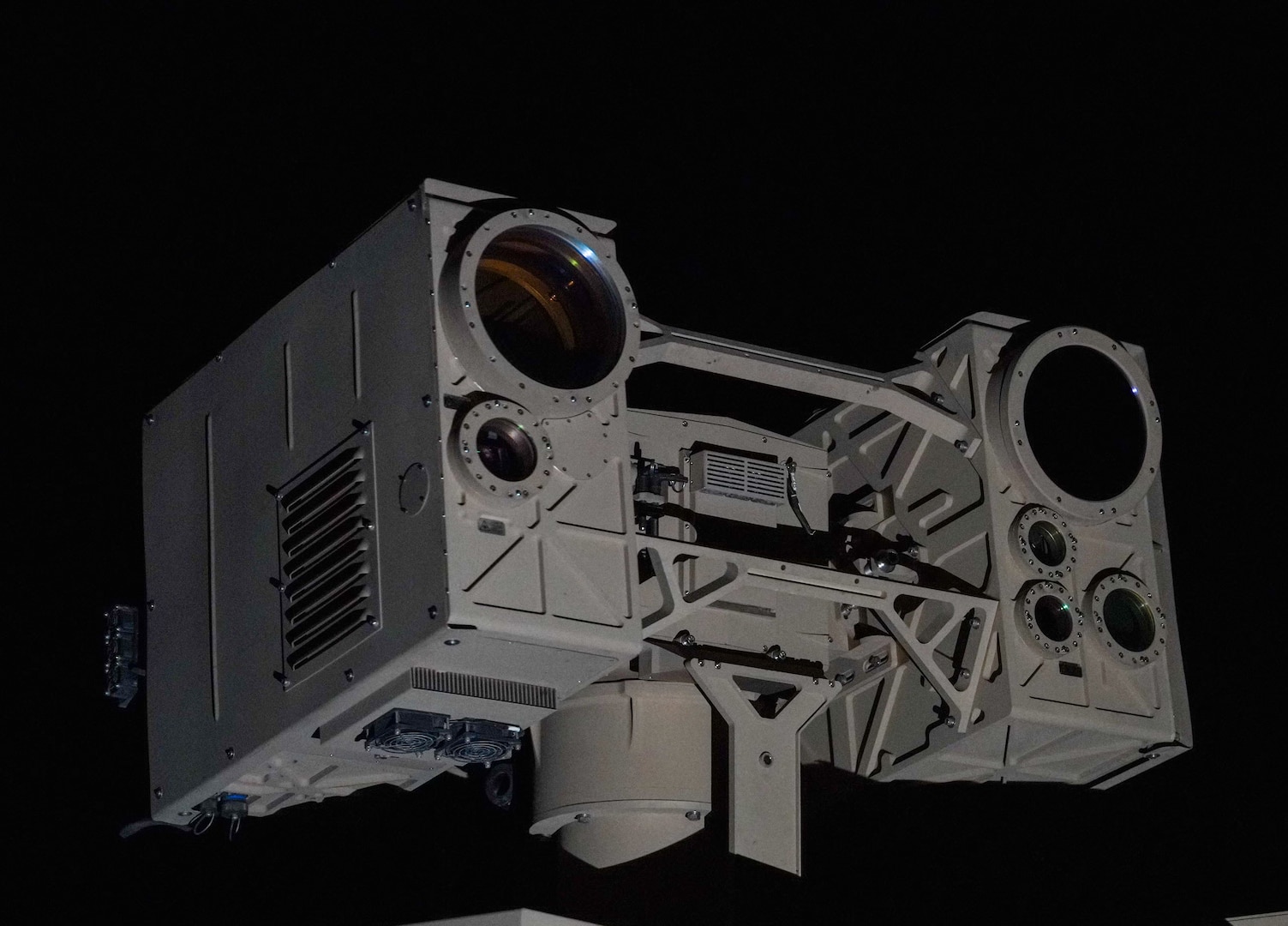
On the late-night hours of August 25 and 26, Joint Task Force – Southern Border used the Army Multipurpose High Energy Laser to "engage and defeat three hostile UAS, determined to be such based on their use in direct support of activities posing a physical threat to U.S. military personnel and CBP partners." [PRIMARY-VERBATIM, JTF-SB release, Aug 27 2026]
Three aircraft. One night. Not a range demonstration — an operational engagement, published by the task force itself two days later.
CBS puts the run at "11 the laser took down over a span of 10 days." [src: CBS News, Sept 7 2026] That is the source for the count in this article's title, and the span depends on where you start it: USNORTHCOM's September 4 release dates first employment to Aug. 24, which would make it eleven days, not ten.
Then Northern Command put the whole year on the record. In an operational update dated September 4, USNORTHCOM reported that the task force had defeated more than 300 unmanned aircraft this calendar year using kinetic and non-kinetic systems — more than 100 of them in the month of August alone — and that eleven of those were taken by the laser as of September 4, after the system was folded into the layered defense in August. [ARCHIVED-PRIMARY, USNORTHCOM operational update, Sept 4 2026]
Sit with the August figure. More than a hundred defeats in the month the new system arrived, against more than three hundred for the year to that point [ARCHIVED-PRIMARY, USNORTHCOM release, Sept 4 2026]. Both are floors — the release says "more than" in both cases — so the honest reading is that August was a heavy month, not a precise multiple of any other month. The release publishes no monthly series and neither will this piece.
The figure everyone is repeating is about three dollars per shot — and it is worth knowing exactly whose number that is. CBS reports it as "around $3, according to AeroVironment." [src: CBS News, Sept 7 2026] That is the manufacturer's figure, published days after the same manufacturer won a $464.8 million production contract for the system. It may well be right. It is not independent, and nobody should carry it into a budget meeting without saying where it came from.
The same reporting puts a single unit at roughly $17.4 to $25 million, sourced to budget documents by way of a trade newsletter. [src: CBS News, citing Laser Wars] Hold both numbers together, because using only the first one is how this gets oversold.
One detail most coverage leaves out, and it is worth having straight. The USNORTHCOM release states that AMP-HEL "was first employed in border protection operations on Aug. 24." [ARCHIVED-PRIMARY, USNORTHCOM release, Sept 4 2026] CBS separately reports the system "made its debut by taking down three drones on Aug. 25 and 26." [src: CBS News] Both can be true — first employment and first defeat are different events, a day apart — and the distinction matters only if you are trying to date the capability rather than the engagement.
The cost curve finally inverted
The structural problem with air defense has always been the exchange ratio. CBS puts it plainly: other air-defense systems have "interceptors that each cost millions of dollars" [src: CBS News, Sept 7 2026] — spent against airframes that cost a rounding fraction of that. An adversary with a credit card and patience wins on arithmetic alone. Every honest counter-drone brief of the last five years has had that slide in it, and nobody had a good answer.
At about three dollars a shot, the marginal cost of one engagement falls below the cost of the thing being engaged. That is the part that has not been true in this domain before, and it is the difference between a capability you ration for the highest-value site on your list and one you can afford to leave running.
Be precise about which cost moved, because this is where the enthusiasm outruns the arithmetic. The acquisition cost did not move — $17.4 to $25 million a unit [src: CBS News, citing Laser Wars] is not cheap, and the $464.8 million award [VENDOR-PRIMARY, AeroVironment release] buys dozens, not hundreds. What changed is the exchange ratio per engagement: the recurring cost of saying no to one more drone. If your problem is a handful of intrusions a year, the capital cost still dominates and this changes nothing for you. If your problem is dozens of airframes a night, every night, the recurring cost is the whole problem — and that is the problem this solves.
And the Army just committed to it. On September 2, AeroVironment was awarded $464.8 million by the Army's Portfolio Acquisition Executive for Fires for the Enduring-High Energy Laser program — "the first-ever production contract for high energy laser weapon systems in United States history." The award covers dozens of 30-kilowatt LOCUST X3 systems scoped against Group 1–3 drones, integrated on the Joint Light Tactical Vehicle with palletized options, plus support and training. The program "builds upon the success of the Army Multi-Purpose High Energy Laser (AMP-HEL) prototypes currently in use by the Army." [VENDOR-PRIMARY, AeroVironment release, Sept 2 2026]
That last sentence also clears up a confusion running through the coverage — the government release says AMP-HEL, the press says LOCUST, and the vendor's own press release puts them in the same lineage. Same lineage is not the same system, which matters below.
Prototype to program of record. For anyone who has watched directed energy get promised since the 1980s, that transition is the actual headline.
What it does, and what it doesn't
The honest capability picture matters more than the enthusiasm, so here is both halves.
What it does: thermal defeat at the speed of light, against the class of small drones a cartel, a smuggler, or a hobbyist-turned-problem is flying. (The Group 1–3 scoping is the production system's, from the award [VENDOR-PRIMARY, AeroVironment release]; no pinned source states the fielded prototype's envelope.) No magazine to run dry in the conventional sense. No interceptor inventory to resupply. No fragments falling on somebody's roof.
One distinction worth keeping straight, because the coverage runs them together. The system used at the border is AMP-HEL, the Army prototype. The 30-kilowatt LOCUST X3 figure belongs to E-HEL, the production system bought on September 2 — a different, later article of equipment that the vendor says "builds upon" the prototypes [VENDOR-PRIMARY, AeroVironment release]. No source pinned for this piece states AMP-HEL's own output, so no power figure is asserted here for the system that actually did the engagements. If you are sizing a threat envelope, size it against the published production spec — that is the only figure any source here supports.
What it doesn't: performance is reported to degrade in rain and atmospheric vapor [src: CBS News]. That is not a footnote — it is the difference between a clear-night capability and an all-weather one, and any program plan that assumes continuous coverage from a single directed-energy system is assuming away the weather. Power and thermal management bound the engagement rate. And a beam operating in the National Airspace System is a genuine safety-integration problem, which is why the Department and the FAA signed a safety agreement before this was fielded at scale [src: The Hill, March 2026]. The vendor's own release describes its White Sands testing as having "directly enabled a DOW–FAA safety agreement validating the system for domestic use." [VENDOR-PRIMARY, AeroVironment release]
Real benefits, real costs, real limits. That combination is what "mature" looks like.
And then the incursions dropped
This is the part that should interest anyone who has ever had to justify a counter-drone line item.
Once the system started firing, drone activity in the sector fell off sharply. Military officials told CBS News there has been "a roughly 75% decrease in the number of drones probing the southern border in the Rio Grande Valley" in the days following the laser's first use. [src: CBS News, Sept 7 2026 — attributed to unnamed officials] Army Col. Robert Felicio, who commands the 130th Maneuver Enhancement Brigade on the border, told CBS there has been a "significant" change in activity since the laser entered the picture. [src: CBS News]
Felicio also explained what the officers running it think the actual mechanism is, and it is not deterrence in the abstract:
"When you just send it back and then it comes back up or is defeated temporarily, but the game changer is ensuring that that tool can't be used again against you." [src: CBS News, Sept 7 2026 — Col. Robert Felicio, direct quotation]
That is attrition, not intimidation. Jamming returns an airframe to its operator, who flies it again tomorrow. A thermal kill removes it from the adversary's inventory permanently.
Set alongside Northern Command's own figures — 100-plus defeats in August, against 300-plus for the year [ARCHIVED-PRIMARY, USNORTHCOM release] — in the month the laser arrived, the picture is consistent. Intensive engagement, followed by a steep fall in activity in the sector where the engaging happened.
Two honest qualifications, because they determine how you can use this.
It is a short window in one sector, and it measures observed drones. And per CBS's account, Felicio and other military officials acknowledged the drop may also have been caused by other variables, such as the cartels finding different routes — while noting it followed the laser's debut. [src: CBS News, Sept 7 2026 — this is the reporter's characterization of what officials acknowledged, not quoted speech, and it is attributed to Felicio and others collectively rather than to him alone.] Felicio also declined to give a daily drone count for his unit, which is worth knowing before anyone builds a rate out of these figures.
Neither of those is a debunking — and for most people reading this, neither one changes the answer. If your job is protecting a specific piece of ground, deterrence and displacement are both wins. The traffic over your site went down. What you cannot yet say is that the total volume across the border went down, or that it stays down once an adversary adapts. That is a ninety-day question, not a ten-day one.
One pairing to avoid. CBS reports the 75 percent alongside Gen. Gregory Guillot's 2024 testimony that there are "approximately 1,000 drone incursions at the southern border each month" [src: CBS News] — and notes in the same breath that Col. Felicio "didn't disclose the daily number of drones his unit sees." Those two figures describe different scopes (one sector versus the entire border) in different years, so dividing one into the other produces a number neither source supports. It is an easy slide to build and a hard one to defend.
The defensible version is the strong one anyway: a sustained engagement campaign coincided with a sharp drop in drone activity in that sector, and the commander on the ground called it significant.
The system is visibly learning
Worth noting because it is the part that should give a program manager confidence rather than concern.
Earlier this year the coordination was rough. In February a Pentagon-loaned laser was used near El Paso against what turned out to be mylar balloons, and the FAA restricted the airspace — CBS describes it as having "briefly shut down El Paso's airport" [src: CBS News, Sept 7 2026, pinned]; CNN reported the restriction as reaching 18,000 feet and being lifted after roughly eight hours [src: CNN, Feb 11 2026, not pinned]. Sixteen days later a CBP-launched drone was brought down near Fort Hancock after the flight was not deconflicted with the task force. [src: CNN and NPR/DefenseScoop, Feb 2026 — the second account originates with lawmakers]
Then the system went to White Sands for testing under a joint interagency task force, and that testing is what the manufacturer credits with enabling the Department-FAA safety agreement validating it for domestic use. And by late August the engagements were clean, published, and against the threat the system exists for.
That is a capability going through the integration problems every new system goes through, and coming out the other side in about six months. The February episodes are the reason the deconfliction procedures exist — not an argument against the technology.
What this means depending on where you sit
If you fly commercially, the February lesson is the operational one: know whose airspace you are in and make sure your flight notice actually reaches the people holding mitigation authority there. By the account lawmakers gave, a federal agency lost an aircraft to that exact gap. Deconfliction is an airworthiness item now, not a courtesy.
If you build airframes, directed energy became a design input on September 2. Thirty kilowatts, Group 1–3, dozens of production units. Survivability against a thermal kill is a different engineering problem than survivability against jamming, and anyone selling into that envelope has a new question on the table.
If you buy for a federal program, the exchange ratio just moved in your favor and there is now a production line to buy from. The remaining constraints are atmospheric, thermal, and regulatory — not budgetary per engagement.
If you are a state, local, tribal or territorial agency, none of this hardware is coming to you, and that is fine — it is not the tier you operate in. What it tells you is that the threat is being taken seriously enough to fund at scale, which is the same argument you are making in your own budget cycle. Your route runs through 6 U.S.C. 124n and certification at the FBI's National Counter-UAS Training Center. Be precise about what "available" means there, because the rule turns on which systems you are running.
"Detection and warning activity conducted using systems that do not require the authority of the Act or the relief it provides from certain laws is not subject to this part." [REG-VERBATIM, 6 CFR 124.12(a)]
Both limbs matter, and the second is the one that catches people. Part 124's definitions section gives the concrete cases — systems "that do not require the authority of 6 U.S.C. 124n (including, for example, electro-optical, infrared, acoustic sensors, and radar)" [REG-VERBATIM, 6 CFR 124.2]. Cameras, thermal, acoustic and radar sit outside this part — which is not the same as sitting outside regulation. The next sentence of the same definition says so: "Operation of RF-emitting C-UAS systems remains subject to applicable Federal Communications Commission authorization requirements and Federal Aviation Administration coordination if such emission could impact the National Airspace System or other systems located at or near airports." [REG-VERBATIM, 6 CFR 124.2] Radar emits. Being outside Part 124 buys you nothing from the FCC.
And a system that relies on the Act's relief from certain laws is inside this part whatever it is called. The relief runs to interception — §124.7(e) permits systems "to intercept communications to or from an unmanned aircraft or UAS" [REG-VERBATIM, 6 CFR 124.7(e)] — so a detector that reads the aircraft's downlink telemetry or video is relying on that relief just as much as one that reads the control link.
Detection and warning under the Act is a different matter. Section 124.12(b) conditions it on four things together: a current Detection and Warning Certification for all personnel; systems drawn from the technology categories on the Authorized Technologies List and, where the Authorized Systems List has been populated for a category, specific systems from that list; an implementation policy under §124.6(a) or a detection-and-warning policy under §124.6(g), plus the portal attestation and a §124.8 Operations Plan; and compliance with §124.14 privacy, data-handling and retention requirements. [REG-CITE — paraphrase of 6 CFR 124.12(b), not a quotation; read the section.] What is available today is the certification pathway, not a shortcut around those four.
The one thing that would help everyone
The engagements were published; the legal basis was not. The task force release names the unit, the system, the date and the target set. It cites no statute, and no public statement since has named one.
To be fair to the command, it has spoken to the question in general terms. Gen. Gregory Guillot, commander of NORAD and USNORTHCOM, is quoted in the September 4 release saying that "[f]rontline troops have the right authorities and are leveraging a highly capable network to thwart threats to the forces conducting the territorial integrity mission." [ARCHIVED-PRIMARY, USNORTHCOM release, Sept 4 2026] The same release's photo caption describes U.S. Northern Command — working with DHS and CBP — as operating "within narrowly defined authorities." So the command has said the authorities exist and are bounded. What has not been published is which ones.
This is not a complaint. The operators did the job and published it, which is more transparency than this sector usually gets. But the sector is trying to grow up, and naming the authority is how it does that. The provision most often cited for Defense Department counter-drone action inside the United States is 10 U.S.C. § 130i, which reaches a defined "covered facility or asset" — a closed list of mission categories. Every one of those categories also requires the Secretary's identification through a risk-based assessment under clause (i); one of them — the catch-all for Department-controlled installations, at 10 U.S.C. § 130i(m)(4)(A)(iii)(X) — additionally requires a site-by-site determination by the Secretary and a certification to the Secretary of Transportation, the Attorney General, and the appropriate congressional committees. Which category a border task force falls under, if any, is a reasonable question with a checkable answer.
Getting that on the record helps everybody: it tells manufacturers what they are building toward, tells agencies what they can plan against, and moves this from a wild-west phase into a practice with rules people can follow. The faster that happens, the faster the rest of the sector can build on what just got proven.
One planning note while you are in the statute. Section 130i(n) provides: "The authority to carry out this section shall terminate on December 31, 2030." [STATUTE-VERBATIM] That is a different date from the general federal counter-drone sunset of September 30, 2031 under 6 U.S.C. 124n(j)(1), and different again from the state, local, tribal and territorial sunset of December 31, 2031 under 124n(j)(2). Three authorities, three dates, routinely conflated — and the shortest belongs to the one with the newest hardware. If you are writing a multi-year roadmap, put all three on the same page.
Brian Rutherford is a Marine Corps Reconnaissance veteran and a certified combat marksmanship and foreign weapons instructor, an FAA Part 107 certificated pilot, and a former federal government contracting CEO (2009–2013). He founded DELALLi, which builds readiness training for agencies operating in this space. DELALLi does not certify anyone under 6 U.S.C. 124n; the FBI's National Counter-UAS Training Center is the sole certifying authority for mitigation.
On sourcing, since this piece turns on numbers. Two tiers appear above and they are marked where they occur. Archived primary, held as hash-verified copies and quoted verbatim: 10 U.S.C. 130i (laws in effect September 7, 2026); 6 U.S.C. 124n, the source of the two later sunset dates; the Joint Task Force – Southern Border release of August 27; the USNORTHCOM operational update of September 4; and the AeroVironment release of September 2 — the last being a manufacturer's statement, marked as such wherever it is used. News reporting, also held as a hash-verified copy: the CBS report of September 7, which is the source of the 75 percent figure, the per-shot and per-unit costs, the weather limitation, and Col. Felicio's quoted remarks. The February 2026 incidents and the March Department-FAA safety agreement rest on reporting we have not archived — CNN, NPR and DefenseScoop for the first, The Hill for the second — and are labelled where they appear. Bold emphasis inside quotations is added; the words are unaltered.
One correction is owed in public, because this article's claim on your attention is its sourcing. A draft of this piece placed a sentence inside quotation marks and attributed it to Col. Felicio as something he said. Those words were the CBS reporter's own prose, describing what Felicio and other officials collectively acknowledged. It was caught in an adversarial review before publication, and it is the reason the CBS article is now held as a checked source rather than cited from memory. His actual words appear above.
Stay Informed on Drone Threats
Weekly intelligence on C-UAS developments, regulatory changes, and security insights from a Part 107 pilot and defense veteran.
Unsubscribe anytime. We never share your address — privacy policy.