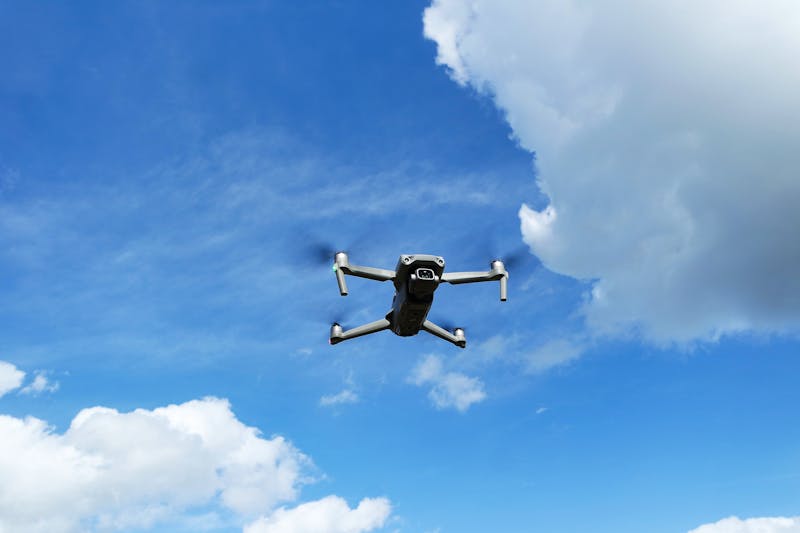
FAA Part 108: What Drone Operators Need to Know
The Biggest Change to Drone Regulations Since 2016 Will Reshape Commercial Operations
By Brian Rutherford | December 17, 2025
Updated September 21, 2026 — the timeline below is rewritten to the record as it stands: the executive-order target was February 1, 2026 (not March, as this piece first said), that date passed without a final rule, the FAA reopened comments for two weeks in January on electronic conspicuity, and the final rule has been under OMB review since July 10, 2026. The explainer sections are unchanged in substance because the August 2025 NPRM is still the operative proposal.
On August 7, 2025, the FAA's proposed rule was published in the Federal Register at 90 FR 38212.
Part 108—the long-awaited Beyond Visual Line of Sight (BVLOS) rule—establishes a framework for routine operations beyond visual range. The proposed rule is public. The final rule is written and sitting at the Office of Information and Regulatory Affairs, where it has been since July 10, 2026; it cannot publish until that review concludes.
This is the most significant proposal in commercial drone regulation since Part 107 launched in 2016. If it is finalized in anything like its proposed form, it changes how drones operate in American airspace.
Some operators will benefit significantly. Others will face substantial adaptation requirements.
Here's what you need to understand.
What Is BVLOS and Why Does It Matter?
Under current Part 107 rules, you have to keep your drone within visual line of sight. Section 107.31 says it this way: "With vision that is unaided by any device other than corrective lenses, the remote pilot in command, the visual observer (if one is used), and the person manipulating the flight control of the small unmanned aircraft system must be able to see the unmanned aircraft throughout the entire flight" — the section goes on to list what that sight must be good for.
This single requirement has been the primary constraint on commercial drone operations. It limits:
- Range: as far as the eye can see, and no farther
- Scale: you need a pilot (or observer) for every drone in the air
- Use cases: long-distance inspection, delivery, and surveillance are restricted
To fly beyond visual line of sight today, you need a waiver or an exemption. They are approved case-by-case and approval isn't guaranteed.
Part 108, as proposed, changes the approach.
Instead of waivers, the proposal offers a standardized framework. Instead of case-by-case approvals, categories and permits. Instead of individual flight approvals, a structure an operator could build a scalable business on.
This is how drone delivery becomes practical at scale. This is how infrastructure inspection scales. This is how agriculture monitoring covers entire regions instead of single fields.
The Two-Tier System: Permits vs. Certificates
Everything from here to the timeline describes the NPRM as proposed in August 2025. The final rule at OMB may differ on any of it.
Part 108, as proposed, creates two pathways to BVLOS operations:
Operating Permits (Lower Risk)
- The lighter of the two authorizations, for operations under the NPRM's size, weight, speed and population thresholds
Operating Certificates (Higher Risk)
- Operations that exceed the permit thresholds "would instead need to seek operational certification"
- In the NPRM's words, a certificate "would allow for more complex package delivery, agricultural operations, aerial surveying, and civic interest operations than operating under an operating permit"
- "Certificated operations would receive greater oversight from FAA but would also be able to use larger aircraft, have more aircraft, and have more flexibility to operate over people"
- Certificate holders would have to develop a safety management system and a training program for operations personnel
The FAA proposes "five categories of ground risk to people based on population density." Higher category means more requirements—but also more capability.
The Structural Shift: From Pilot to Company
Here's the proposed change that would affect traditional drone operators:
Part 107 puts responsibility on the individual pilot.
Part 108, as proposed, puts responsibility on the company.
Under the proposed rule the FAA "would not require airman certificates" but would require every operator, permitted or certificated, "to have an operations supervisor responsible for the overall safety of the operation." The operating entity, not an individual certificate holder, carries the responsibility — a corporate model, closer to how certificated air carriers are regulated than to Part 107.
New roles include:
- Operations Supervisor: in the NPRM's words, "responsible for the overall safety of the operation"
- Flight Coordinator: In the NPRM's definition, an individual who monitors the UAS and "can control, initiate emergency actions, or issue commands to the unmanned aircraft during flight"
The traditional remote pilot flying stick-and-rudder would give way to supervisors managing automated systems.
This benefits large operators with sophisticated automation platforms. It presents challenges for small operators who built their business around skilled pilots manually flying complex missions.
Equipment Requirements
To fly under Part 108 as proposed, your drone would need a "declaration of compliance" — the manufacturer's declaration that the aircraft has certain capabilities and meets the technical safety requirements for BVLOS flight.
Required capabilities include:
- Detect-and-avoid capability against non-cooperative aircraft — proposed for operations in Class B and Class C airspace and over Category 5 population areas (§§108.180(b), 108.185(d)(5)(ii)), where "non-cooperative" means aircraft not broadcasting ADS-B Out or an approved alternate electronic-conspicuity signal
- Remote ID broadcasting position and identification
- Continuous position tracking
- Strategic deconfliction and conformance monitoring through an automated data service provider certificated under a proposed new Part 146 — required over certain populated areas and in controlled airspace
You couldn't take any drone and fly BVLOS. You would need accepted equipment.
Proposed §108.700 includes country-of-origin requirements.
Proposed §108.700(b)(1) makes a manufacturer eligible for airworthiness acceptance only if the UAS is manufactured in the United States or in a country with a bilateral airworthiness agreement, or bilateral aviation safety agreement with implementation procedures, that addresses unmanned aircraft — or an equivalent agreement.
Translation: for a drone manufactured outside the United States, eligibility turns on whether the manufacturer's country has one of those agreements with the United States covering unmanned aircraft. The NPRM sets the test. Every foreign-manufactured drone now in commercial use would have to be evaluated against it — and, since December 22, 2025, against the FCC's Covered List as well.
If the provision stands as written, it reshapes the equipment landscape.
What Happens to Part 107 Waivers?
If you currently hold a Part 107 BVLOS waiver:
The NPRM proposes to take BVLOS out of Part 107 entirely. It would amend §107.1 so that Part 107 no longer applies to BVLOS operations, and it says why: "it no longer makes sense to provide waivers to the part 107 rules for this type of activity. Any relief sought should be done under the auspices of part 108."
What the NPRM says about existing waivers is an expectation, not a rule. In its preamble the FAA "anticipates that certain operations such as agricultural, package delivery, aerial surveying, photography, and flight testing currently conducted under waivers or exemptions to 14 CFR part 107, 91, or 135 would transition to the operations under part 108 when their exemptions expire, and a reasonable transition can occur." For BVLOS work now done under Part 135 and Part 137 exemptions it says the same thing with an edge: those operations "are expected to transition to part 108 within a reasonable timeframe after the rule becomes effective," the FAA "understands that, to make that transition, existing operators will need time to update their fleets," but it "does not intend for these operations to continue under part 135 for an indefinite amount of time."
Read together: the FAA's stated expectation is that you fly out your current waiver or exemption and move to Part 108 when it expires, with "a reasonable transition" — the proposed rule text on this is the §107.1 amendment; the date, the meaning of "reasonable," and what happens to a waiver on the effective date are for the final rule.
The NPRM proposes no "grandfathering" of existing waiver holders; the word does not appear in it.
If you've invested in obtaining a Part 107 waiver, start planning for how you'll move to Part 108.
The Right-of-Way Question
The largest single issue in the comments: Who yields to whom? The FAA's own count, in its January 2026 reopening notice: "More than half of the approximately 3,100 comments received to the NPRM discussed the right-of-way proposal in some capacity." (The docket shows 3,929 posted comments as of September 2026, including the reopening.)
Under the proposed rule, a Part 108 drone would have presumptive right-of-way over manned aircraft except in four situations the FAA lists: when the manned aircraft is broadcasting its position through ADS-B Out or an approved alternate electronic-conspicuity device; in Class B or C airspace; when the manned aircraft is taking off or landing; or over Category 5 population areas. Outside those, the drone does not have to yield.
The FAA's own summary of the record, in the reopening notice: public comments "stated that FAA's proposal would introduce unnecessary complexity to right-of-way and result in confusion by creating varying right-of-way rules depending on different operational areas"; "Numerous commenters also raised significant practical concerns with requiring manned aircraft to yield to UA"; others warned the detect-and-avoid provisions "would require prohibitively expensive technology that has not been adequately proven for safety value." On the other side, "many commenters supported the broader use of ADS-B Out or alternate EC technologies," and some "identified mandatory ADS-B or alternate EC for manned operators in low-altitude airspace as the preferred, and only viable, collision risk mitigation strategy."
The concern underneath is substantive: a manned aircraft that is not broadcasting is one the drone's system may not see, and under the proposal it is the one the drone does not have to yield to.
The agency's public moves on this since the comment period closed point at the equipment side of the question. On January 6, 2026 it held two listening sessions with UAS manufacturers and industry associations, where it "heard general support for ADS-B or alternate EC devices, though opinions on specific requirements varied." On January 28 it reopened the comment period for 14 days, to February 11, on seven numbered questions — six of them about alternate electronic-conspicuity devices for manned aircraft, the seventh about other ways to make manned aircraft electronically detectable: whether such devices exist today, whether ADS-B Out's performance rules should apply to them, whether RTCA's DO-282C standard should be accepted, and whether a device should tell the pilot it has stopped working. "Comments unrelated to the questions below will be treated as out of scope." Read plainly: the FAA is working out what a manned aircraft must carry to be seen by a drone, which is the practical form of the right-of-way rule.
How the FAA resolves this will define BVLOS operational boundaries.
Who Benefits, Who Faces Challenges
Position to Benefit:
- Large, well-capitalized operators with automated platforms
- Drone delivery companies who can scale beyond pilot experiments
- Technology providers building detect-and-avoid, UTM integration, and automation systems
- American drone manufacturers meeting country-of-origin requirements
Face Adaptation Challenges:
- Small operators who may find full safety management systems costly
- Traditional service providers relying on skilled pilots rather than automation
- Public safety agencies with limited budgets and equipment constraints
- Anyone using equipment that doesn't meet airworthiness requirements
The framework's own structure points the same way: the certificate tier carries a safety management system, a training program and "greater oversight from FAA," and the NPRM's own regulatory analysis is where the small-entity burden is argued — read it before assuming the permit tier is enough for your operation.
The Timeline (as of September 21, 2026)
| Date | Event | |------|-------| | June 6, 2025 | Executive Order 14307, "Unleashing American Drone Dominance," signed. Section 4(a): a proposed BVLOS rule within 30 days; "A final rule shall be published within 240 days of the date of this order, as appropriate." | | August 7, 2025 | NPRM published, 90 FR 38212 (Docket FAA-2025-1908). Comments due October 6, 2025. | | September 29, 2025 | FAA denies requests to extend the comment period. | | October 6, 2025 | Comment period closes. | | January 28 – February 11, 2026 | FAA reopens comments for 14 days on seven questions about electronic conspicuity devices. | | February 1, 2026 | The executive order's 240-day mark. No final rule. | | February 10, 2026 | FAA denies requests to extend the reopened comment period. | | July 10, 2026 | Final rule received at OMB's Office of Information and Regulatory Affairs for Executive Order 12866 review (RIN 2120-AL82, stage: Final Rule). | | September 21, 2026 | Still listed as "Pending EO 12866 Regulatory Review" at OIRA, with "Legal Deadline: Statutory." Four Federal Register documents on the docket (the NPRM, the September 2025 denial of extension, the January reopening, the February denial of extension), all proposed-rule stage; no final rule published. | | December 7, 2026 | The statutory deadline. 49 U.S.C. 44811(c), added by the FAA Reauthorization Act of 2024: "Not later than 16 months after publishing the proposed rule under subsection (a), the Administrator shall issue a final rule based on such proposed rule." Sixteen months from August 7, 2025. (The same section's NPRM deadline — four months after the May 16, 2024 enactment — was missed by roughly eleven months.) | | After publication | Effective and compliance dates are set by the final rule itself. Not yet known. | | After the final rule | Part 107 stops applying to BVLOS (proposed §107.1 amendment); the FAA's preamble expectation is that existing waivers and exemptions transition to Part 108 "when their exemptions expire" — the final rule has to say how. |
The original version of this piece said the executive order "mandates the final rule by March 2026." It does not. Two hundred forty days from June 6, 2025 is February 1, 2026, and the order's own qualifier is "as appropriate." That date has passed; the rule is at OMB. The date that is not the executive's to move is Congress's: December 7, 2026. Trade-press expectations of a publication date are not carried here because none of them is the FAA's.
What You Should Do Now
If You're a Current Part 107 Operator:
- Read the NPRM — It runs 180 Federal Register pages (90 FR 38212–38391); review the sections relevant to your operations
- Assess your equipment — Does your drone have detect-and-avoid? Remote ID? Can it integrate with UTM?
- Evaluate your business model — Does it depend on pilot skill or can it transition to supervised automation?
- Budget for compliance — SMS requirements, training programs, and approved equipment have costs
If You're Planning BVLOS Operations:
- Don't wait for the final rule — Start building compliance infrastructure now
- Choose equipment strategically — Prioritize drones likely to receive declaration of compliance
- Build relationships — With UTM providers, detect-and-avoid system vendors, and industry groups
- Consider corporate structure — Part 108 puts responsibility on the organization, not individuals
If You're a Public Safety Agency:
- Contact your state aviation office — ask what it is doing on Part 108 for government operators
- Engage with the associations your agency already belongs to — public-safety accommodations are argued in the docket, not by individual agencies
- Document your waiver history — the FAA's stated expectation is a transition "when their exemptions expire"; a record of safe BVLOS operations is what you will bring to it
Assessment
Part 108 is both an opportunity and a challenge.
For the industry as a whole, it's significant. Routine BVLOS operations would enable use cases that have been restricted for a decade. Drone delivery, large-scale inspection, agricultural monitoring at scale—all become practical.
For individual operators, it's a transition point. The regulatory framework is shifting toward automation, corporate responsibility, and American-made equipment. If that describes your operation, you're positioned well. If it doesn't, your adaptation clock starts on the day the final rule publishes — and that rule has been at OMB since July.
The drone industry of today—dominated by DJI hardware and skilled individual pilots—will look different once Part 108 is in force, and the FCC's Covered List action of December 2025 has already started that shift on the equipment side.
The rules are changing. Planning for that change is appropriate.
Brian Rutherford is a Marine Corps veteran, FAA-certified drone pilot, and commercial UAS consultant. He holds a Part 107 certificate and has tracked BVLOS regulation development since the FAA chartered the BVLOS Aviation Rulemaking Committee in June 2021.
Sources
Primary (retrieved and hashed into DELALLi's source corpus, September 2026):
- Normalizing Unmanned Aircraft Systems Beyond Visual Line of Sight Operations, NPRM, 90 FR 38212 (August 7, 2025) — Federal Register
- Denial of Extension of Comment Period (September 29, 2025) — Federal Register (pinned as the docket's index record, not the document)
- Reopening of Comment Period, 91 FR 3695 (January 28, 2026) — Federal Register
- Executive Order 14307, Unleashing American Drone Dominance, 90 FR 24717 (June 6, 2025) — Federal Register
- EO 12866 review record, RIN 2120-AL82, received July 10, 2026 — OMB/OIRA, reginfo.gov
- Docket FAA-2025-1908 comment count — regulations.gov
- FAA Reauthorization Act of 2024, Pub. L. 118-63, §930 (49 U.S.C. 44811) — GPO
- 14 CFR 107.31, Visual line of sight aircraft operation — eCFR
Secondary:
- FAA's Proposed Part 108 BVLOS Rule: Industry Response and Key Concerns — DLA Piper
- Industry Split as FAA's Part 108 Rule Moves Into Review Phase — ZAG Daily
- Part 108: What We Know So Far — Drone Pilot Ground School
- New FAA BVLOS Rules: What Drone Operators Must Know — Skydio
- FAA Releases Long-Awaited BVLOS Proposed Rule — Pillsbury Law
- Beyond Visual Line of Sight Fact Sheet — FAA
Stay Informed on Drone Threats
Weekly intelligence on C-UAS developments, regulatory changes, and security insights from a Part 107 pilot and defense veteran.
Unsubscribe anytime. We never share your address — privacy policy.